
 Ai Governance
AI Governance Training for Beginners: Where to Start and What to Learn
New to AI governance? Learn the skills, principles and frameworks to study first, then compare beginner training options and choose...

AI can make everyday work faster, but an employee can turn a useful productivity tool into a privacy, accuracy, fairness, or security problem with a single careless prompt.
The ethical use of AI means using artificial intelligence responsibly while protecting data, checking accuracy, reducing unfair outcomes, maintaining transparency, and keeping people accountable for important decisions.
It is what keeps AI-assisted writing, research, analysis, coding, recruitment, and decision support from creating risks that employees and organizations still have to answer for. Responsible use does not mean avoiding AI. It means understanding where the technology helps, where it can fail, and when human judgment has to take control.
In this blog, you will learn how to use AI ethically at work, protect sensitive information, verify AI-generated content, identify bias, handle disclosure, maintain accountability, and recognize when stronger human oversight is necessary.
Use AI systems that your organization has approved for workplace use.
Keep confidential, personal, proprietary, and regulated information out of unauthorized AI tools.
Check important AI-generated facts, calculations, sources, and recommendations before relying on them.
Look for unfair outcomes when AI influences decisions involving employees, applicants, customers, or other people.
Be transparent when AI materially contributes to work that others will rely on.
Human accountability remains in place even when AI generates the content or recommendation.
One of the clearest workplace warnings came from Samsung Electronics in 2023.
Employees in its semiconductor business reportedly entered sensitive corporate information into ChatGPT in three separate incidents. One worker submitted source code while troubleshooting, another submitted code for optimization, and another used internal meeting information to generate meeting minutes.
The employees were reportedly using AI to complete legitimate work more efficiently. That is exactly why the incident matters.
AI risk does not always begin with malicious intent. A worker can expose intellectual property or confidential information while simply trying to summarize, troubleshoot, rewrite, or analyze something faster.
This makes protecting data when using AI a basic workplace responsibility. Before sending a prompt, employees need to understand where the information is going, whether the tool is authorized, and whether company data is permitted to leave approved systems.

Ethical AI use is the application of professional judgment to the way AI is used, not simply the decision to use AI.
The U.S. National Institute of Standards and Technology developed its AI Risk Management Framework to help organizations manage AI risks and encourage trustworthy and responsible use. NIST identifies characteristics such as reliability, safety, security, accountability, transparency, privacy, and fairness as important considerations for trustworthy AI.
These principles translate into clear employee responsibilities.
|
Principle |
What It Means for Employees |
|
Privacy |
Protect personal and confidential information |
|
Accuracy |
Confirm important AI-generated claims |
|
Fairness |
Challenge potentially discriminatory results |
|
Transparency |
Disclose meaningful AI involvement when needed |
|
Security |
Use authorized tools and access controls |
|
Accountability |
Take responsibility for submitted work |
|
Human oversight |
Keep people involved in consequential decisions |
The broader issue of AI ethics in the workplace therefore reaches beyond technology teams. Anyone who uses AI to write, analyze, recommend, classify, summarize, communicate, or make decisions can influence whether AI is used responsibly.
The OECD AI Principles reinforce this approach through principles covering fairness, privacy, transparency, security, human oversight, and accountability.
A public AI service should not automatically be treated like a private company workspace.
Employees should be particularly careful with customer records, employee files, contracts, passwords, credentials, proprietary source code, intellectual property, internal financial information, strategic plans, health information, legal material, and other personal or regulated data.
The exact restrictions will depend on the organization, industry, jurisdiction, AI provider, and system configuration. An enterprise AI environment may have contractual and technical protections that are different from those of a personal account.
That is why employees should consult their organization's AI acceptable use policy rather than assuming that every AI tool follows the same privacy or retention rules.
A useful decision test is simple: if the information should not be sent to an unknown external recipient, do not place it into an unapproved AI service.
Data minimization also matters. Even when an approved system is available, employees should avoid submitting information the AI does not actually need to perform the task.

AI-generated content can sound authoritative without being correct.
A generative AI system may provide a nonexistent citation, misstate a regulation, mix current and outdated information, perform a calculation incorrectly, overlook important context, or confidently answer a question that it cannot reliably resolve.
NIST's Generative AI Profile was created as a companion to the AI Risk Management Framework and addresses risks that are unique to or intensified by generative AI.
Employees therefore need to verify AI outputs before treating them as decision-grade information.
The required review should reflect the potential consequences.
|
AI-Assisted Task |
Appropriate Review |
|
Grammar correction |
Basic human review |
|
Marketing content |
Fact and brand review |
|
Research summary |
Original-source verification |
|
Financial analysis |
Detailed professional review |
|
Legal or compliance work |
Qualified specialist review |
|
Decisions affecting people |
Strong human oversight |
A polished answer is not evidence. Important facts should be checked against original or authoritative sources, calculations should be independently reviewed, and high-impact conclusions should involve someone qualified to assess them.
AI can reproduce unfair patterns found in training data, company data, labels, prompts, or historical decisions.
The risk becomes more serious when AI contributes to recruitment, promotion, performance management, fraud detection, lending, insurance, customer eligibility, employee monitoring, or other decisions affecting individuals.
Employees should pay attention when recommendations differ between people without a defensible reason, when the system appears to rely on questionable assumptions, or when nobody can adequately explain why a result was produced.
UNESCO's global Recommendation on the Ethics of Artificial Intelligence places fairness and non-discrimination alongside privacy, transparency, accountability, and human oversight. It also states that AI systems should not displace ultimate human responsibility.
Recognizing AI bias is therefore not simply a technical exercise. Employees need to consider who could be disadvantaged by an output and whether that person could reasonably challenge the resulting decision.
Not every interaction with AI requires the same level of disclosure.
Using an approved tool to improve grammar generally has less significance than using AI to prepare research, generate customer advice, assess an employee, produce a professional recommendation, or create analysis that management will rely on.
The key factor is materiality. The more AI shapes the substance, reasoning, or outcome of the work, the more important transparency becomes.
Employees should follow organizational disclosure requirements and avoid presenting unverified AI-generated analysis as independently researched fact. When a customer, colleague, manager, or affected person reasonably needs to understand AI's role, hiding that role can undermine trust even when the underlying use was permitted.
Responsibility does not transfer to the software.
If an employee submits an inaccurate report, approves an unfair recommendation, sends misleading information, or discloses confidential data, saying that an AI tool produced the material does not fix the outcome.
Human accountability means employees should understand enough about AI-assisted work to question it, edit it, reject it, or escalate it.
This is particularly important when a worker is approving content for publication, making a recommendation to management, communicating with a customer, or participating in a decision that affects another person's rights or opportunities.
AI can assist with judgment. It should not become a convenient substitute for it.

The level of oversight should rise with the potential harm.
AI used to format a document or brainstorm non-sensitive content generally creates less risk than AI used to rank job applicants, evaluate worker performance, interpret a legal obligation, recommend a financial decision, monitor employees, or influence access to important services.
The International Labour Organization has been studying algorithmic management and AI in the workplace, including systems used to organize, assign, monitor, supervise, and evaluate work. Explore the ILO's resources on algorithmic management and AI at work
Hiring, disciplinary action, healthcare-related work, regulatory compliance, financial decisions, cybersecurity actions, safety decisions, and worker monitoring deserve particularly careful review because mistakes can create consequences that are difficult to reverse.
Human oversight must also be meaningful. A person who automatically approves whatever the AI recommends is not providing effective oversight.
Responsible use begins before the first prompt.
Employees should first confirm that the AI system is authorized for the task and determine whether the material contains confidential, personal, regulated, or commercially sensitive information.
During use, unnecessary data should be removed. Personal identifiers should be excluded when they are not essential to the task.
Once AI produces an answer, employees should review the underlying facts, sources, calculations, assumptions, tone, and context. They should also determine whether the result could unfairly affect someone or whether another person needs to review the work.
The final decision should remain with a responsible human who has enough knowledge and authority to change or reject the output.
Uncertainty should trigger verification, not assumption.
An employee may be unsure whether a tool is approved, whether company information can be entered, whether an AI-generated decision requires disclosure, or whether a particular task needs specialist review.
The right contact will depend on the concern. It may be a manager, IT team, information security function, privacy team, HR department, compliance function, or legal team.
Seeking guidance before submitting sensitive information is far easier than dealing with a confidentiality incident afterward.
The ethical use of AI at work is ultimately about keeping human responsibility connected to AI-assisted work.
Employees can gain significant value from AI for research, writing, coding, analysis, communication, and administrative tasks without treating the technology as an unquestioned authority. Responsible use means protecting information, checking important outputs, recognizing unfair outcomes, following workplace rules, being transparent when AI plays a meaningful role, and retaining human control over consequential decisions.
Policies and technical controls matter, but everyday employee choices determine whether those safeguards succeed. Knowing when to question, verify, limit, disclose, escalate, or reject AI output is part of using the technology well.
Employees and organizations looking to build stronger awareness of these responsibilities can explore , which focuses on responsible AI principles and their application in everyday workplace settings.
Ai Governance
New to AI governance? Learn the skills, principles and frameworks to study first, then compare beginner training options and choose...
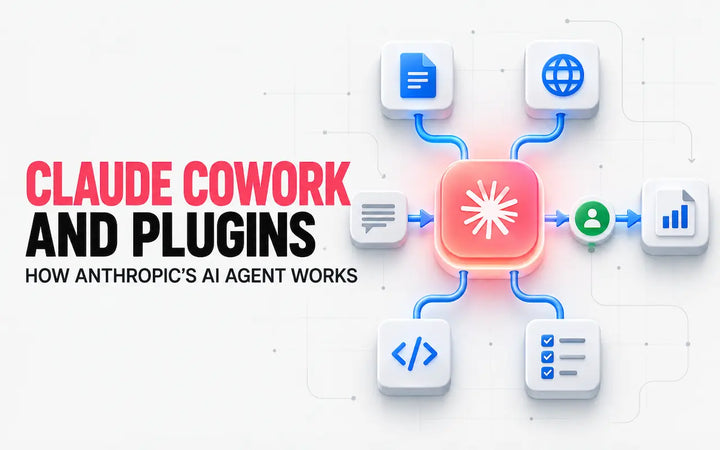
Learn how Claude Cowork, plugins and agentic workflows work for business, including practical use cases, security risks and responsible AI...

Artificial intelligence rarely belongs to one department. A business team may propose a use case, engineers may build or configure...