
 Ai Governance
AI Governance Training for Beginners: Where to Start and What to Learn
New to AI governance? Learn the skills, principles and frameworks to study first, then compare beginner training options and choose...

Artificial intelligence is becoming part of everyday work faster than many organizations can establish rules for using it safely.
AI ethics in the workplace means applying fairness, privacy, transparency, accountability, security, and human oversight to the way employers and employees use AI.
It is what helps organizations decide whether workplace AI is being used responsibly. It is why AI-powered hiring, monitoring, content generation, customer service, and decision support need more than technical performance alone.
The issue is growing quickly. The International Labour Organization reported in 2025 that one in four workers worldwide is in an occupation with some exposure to generative AI, although job transformation is considered more likely than full replacement.
Workplace AI can create bias, privacy, confidentiality, accuracy, and accountability risks.
Human review matters most when AI influences high-impact decisions.
Employees need clear rules about what data can enter AI tools.
Automated hiring can create discrimination even when decisions appear objective.
AI literacy helps employees verify outputs and recognize AI limitations.
Ethical AI requires policies, monitoring, risk assessment, and clear ownership.
Samsung provides a clear example of how productivity tools can become data-governance risks.
In 2023, employees in its semiconductor operations reportedly entered sensitive corporate information into ChatGPT, including proprietary source code and internal meeting material. Samsung subsequently restricted employee use of generative AI services on company devices and networks.
The employees were trying to work faster, not deliberately leak information. That is precisely why AI privacy risks at work need practical controls. Staff must understand which tools are approved, what information is restricted, and whether prompts are being sent outside the organization's controlled environment.
The U.S. Equal Employment Opportunity Commission alleged that iTutorGroup programmed recruitment software to automatically reject female applicants aged 55 or older and male applicants aged 60 or older.
More than 200 qualified U.S. applicants were allegedly rejected. The company agreed to pay $365,000 to settle the case in 2023.
The system was automated screening rather than a modern generative AI model. However, the lesson for AI-assisted recruitment is direct: technology does not make discriminatory criteria neutral.
AI bias in the workplace can also emerge from historical training data, proxy variables, inappropriate performance measures, or systems that consistently disadvantage particular groups. Employers therefore need to test outcomes instead of assuming that an automated score is objective.
In Moffatt v. Air Canada, a customer relied on incorrect information from the airline's chatbot about a bereavement fare.
The British Columbia Civil Resolution Tribunal found Air Canada liable for negligent misrepresentation after the chatbot supplied inaccurate information.
The workplace lesson is simple. Organizations remain responsible for communications and decisions made with AI assistance.
AI hallucinations can sound confident even when an answer is wrong. Legal, financial, HR, compliance, safety, and customer-facing outputs therefore require appropriate verification.

AI can reproduce historical patterns in recruitment, promotion, performance evaluation, task allocation, and termination.
Fairness testing should examine who benefits, who is disadvantaged, whether the variables used are relevant, and whether employees or candidates can challenge outcomes.
AI can also analyze productivity, communications, calls, behavior, location, and performance. Monitoring should be necessary, proportionate, transparent, and accurate. Excessive surveillance can damage employee trust even when the organization has a legitimate reason to collect some workplace data.
Shadow AI appears when employees use AI tools that have not been formally approved, assessed, or governed.
An employee may paste customer data, contracts, source code, financial information, intellectual property, or internal strategy into a public AI service without recognizing that the prompt itself can create a disclosure risk.
A clear AI acceptable use policy should distinguish approved tools, restricted data, prohibited use cases, and situations that require additional authorization.
Organizations should also provide usable secure alternatives. Rules are more effective when employees have approved tools that can actually perform the work they need.
Generative AI can produce invented facts, incorrect calculations, fabricated references, and misleading summaries.
The danger increases when polished language is mistaken for reliable evidence.
Verification should match the consequence. Asking workplace AI to suggest an internal email subject is different from asking it to interpret regulations, calculate financial obligations, assess a job candidate, or provide safety guidance.
NIST's Generative AI Profile recommends managing generative AI risk through governance, mapping, measurement, and ongoing management rather than relying on one-time testing.
Accountability must also remain human. "The AI said so" is not an acceptable decision-making control.
Generative AI can create questions around copyright, licensing, confidential inputs, ownership, and reuse of AI-generated content.
Employees should know when generated material requires legal, technical, or editorial review before it is published or commercially reused.
Ethical concerns also extend to job redesign. ILO research indicates that generative AI is more likely to transform many occupations than eliminate them outright. Responsible employers should connect automation with reskilling, role redesign, and workforce communication rather than treating employee impact as an afterthought.

Ethical AI use at work is risk-based. Controls should become stronger as the possible consequences increase.
|
Workplace Use |
Responsible Practice |
|
Recruitment |
Test for bias and preserve meaningful human review |
|
HR decisions |
Require supporting evidence and escalation routes |
|
Customer service |
Verify consequential answers |
|
Software development |
Protect proprietary code and review outputs |
|
Finance |
Validate calculations and assumptions |
|
Meeting summaries |
Use approved tools for confidential content |
|
Employee monitoring |
Apply transparency and privacy controls |
|
Vendor AI |
Review security, data use, limitations, and accountability |
The principle is proportionality.
Low-risk assistance may need lightweight checks. Decisions affecting employment, rights, money, safety, privacy, or regulatory obligations require stronger oversight.
Start with clear acceptable-use rules. Employees should understand which systems they may use, what data must never be entered, when AI-generated content needs independent verification, and which activities require approval.
Maintain an AI inventory covering third-party systems, embedded AI features, employee-adopted tools, pilots, and internally developed applications. Each significant use case should have an identifiable owner.
Conduct risk assessments before using AI in consequential processes. Consider the people affected, data sensitivity, possible harm, level of automation, legal requirements, and whether an incorrect outcome can be reversed.
Test systems for bias before and after deployment. Models, data, employee populations, and workflows change, so fairness cannot be treated as a one-time exercise.
Protect personal and confidential information through data classification, secure enterprise tools, access controls, and practical guidance on what employees may include in prompts.
Meaningful human oversight is equally important. Reviewers need the knowledge, evidence, time, and authority to reject an AI recommendation. A human who simply approves whatever an algorithm suggests does not provide meaningful oversight.
Organizations should also establish AI incident reporting. Employees need a route for escalating data leaks, biased outcomes, inaccurate outputs, unsafe recommendations, security issues, and unexpected changes to vendor systems.
Finally, build role-specific AI literacy. HR teams need stronger awareness of discrimination risks. Managers need accountability and oversight skills. Developers need data-security guidance. General employees need practical training on confidentiality, verification, safe prompting, and escalation.

AI ethics defines the principles an organization wants its AI use to follow, including fairness, transparency, privacy, accountability, and respect for people.
AI governance turns those principles into operating structures. It assigns owners, creates approval processes, classifies risks, documents systems, monitors performance, and establishes incident procedures.
Organizations need both.
AI ethics without governance can remain aspirational. Governance without ethical principles can become a paperwork exercise with little impact on actual behavior.
The EU AI Act gives workplace AI particular attention.
Annex III identifies certain employment systems as potentially high-risk, including AI used to analyze or filter job applications, evaluate candidates, make decisions affecting employment relationships, allocate work based on personal characteristics or behavior, and monitor or evaluate workers.
The current European Commission timeline states that rules for Annex III high-risk systems are expected to apply from December 2, 2027. AI literacy obligations, however, have applied since February 2, 2025, with supervision and enforcement beginning in August 2026 following the 2026 changes to the legislation.
For organizations operating within the EU AI Act's scope, employee AI literacy is therefore more than a general best practice. It is part of the evolving regulatory environment.
Build AI Ethics Awareness Across Your Workforce
Give employees the knowledge they need to use AI responsibly and ethically at work. This self-paced course covers AI ethics, fairness, transparency, privacy, accountability, common AI risks, responsible AI practices, and workplace governance.
Learn how to recognize ethical risks, protect sensitive information, verify AI-generated content, reduce bias, follow acceptable AI use policies, and support a responsible AI culture across your organization.
Responsibility should be shared, but it should never become vague.
Senior leadership sets risk expectations. HR manages employment implications. Legal, compliance, privacy, cybersecurity, procurement, and risk teams address specialist concerns. Managers supervise how AI is used in day-to-day work. Employees are responsible for following rules, protecting information, checking outputs, and reporting concerns.
Every significant workplace AI system should still have a named owner.
Before relying on an AI tool, employees should consider whether the system is approved, what information they are sharing, who could be affected by the output, what would happen if the answer were wrong, whether independent verification is required, whether bias could influence the result, and who remains accountable for the final decision.
These questions turn abstract ethics into practical workplace behavior.
Yes.
Poorly governed AI may initially appear faster because teams skip review, training, security checks, and governance. That apparent efficiency can disappear when the organization faces data exposure, biased decisions, inaccurate outputs, employee distrust, regulatory problems, or expensive rework.
Responsible workplace AI creates clearer boundaries, safer tools, and greater confidence in how employees use AI.
The goal is not less AI. It is better-controlled AI.
Workplace AI can improve productivity, analysis, communication, and decision support, but those benefits do not remove human responsibility.
Real incidents involving confidential data, automated discrimination, and inaccurate chatbot outputs show that serious ethical problems often emerge from ordinary business activity rather than dramatic technical failures.
Organizations should combine clear policies, secure tools, risk assessments, fairness testing, human oversight, incident reporting, and employee education. Employees also need enough AI literacy to recognize when AI should assist them, when an output must be checked, and when a decision should remain firmly in human hands.
For organizations that want to build those skills across their workforce, explore AI Ethics Fundamentals for All Employees. The course helps employees understand responsible AI use, bias, privacy, accountability, and practical workplace AI risks.
Ai Governance
New to AI governance? Learn the skills, principles and frameworks to study first, then compare beginner training options and choose...
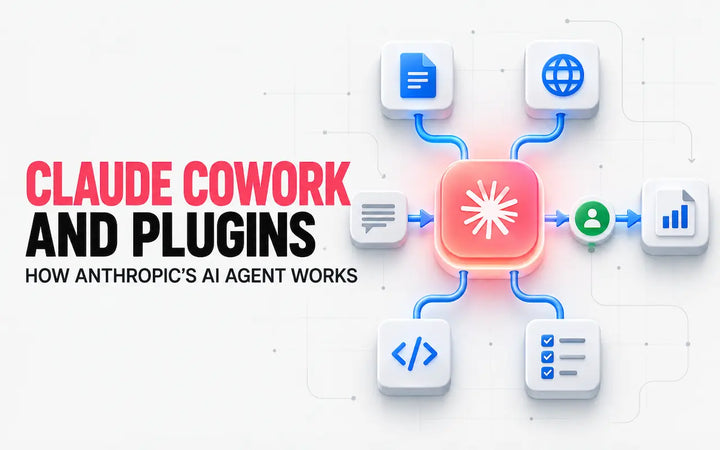
Learn how Claude Cowork, plugins and agentic workflows work for business, including practical use cases, security risks and responsible AI...

Artificial intelligence rarely belongs to one department. A business team may propose a use case, engineers may build or configure...