
 Ai Governance
AI Governance Training for Beginners: Where to Start and What to Learn
New to AI governance? Learn the skills, principles and frameworks to study first, then compare beginner training options and choose...

AI tools can make everyday work faster, but they can also create privacy risks when employees submit information without knowing where that data may be processed, stored, retained, reviewed, or reused. A seemingly routine prompt can expose information that was never intended to leave an approved workplace environment.
AI privacy in the workplace means protecting personal, confidential, proprietary, and other sensitive information when employees interact with AI systems. The risk is not limited to deliberately sharing sensitive data. It can happen when someone pastes an internal document into a chatbot, asks AI to summarize an email thread, analyzes a spreadsheet, uploads a contract, generates a report from customer information, or includes identifying details in a prompt.
Using AI safely does not mean avoiding useful AI tools. It means knowing what information can be shared, which systems are approved for workplace use, and what safeguards are needed before data is submitted.
AI privacy risks often start when sensitive workplace information is entered into AI tools.
Personal, customer, confidential, and proprietary data require greater caution.
Employees should understand how an AI service handles information before submitting workplace data.
Removing names or obvious identifiers does not always make information safe to share.
Organizations need approved tools, clear data rules, access controls, and employee guidance.
Strong privacy protection depends on both responsible employee behavior and effective organizational controls.
AI privacy in the workplace is the protection and appropriate handling of personal, confidential, proprietary, and other sensitive information when employees use AI systems for business tasks. It concerns not only what employees enter into an AI tool but also what may happen to that information afterward.
Workplace data can reach AI systems through prompts, uploaded documents, chat histories, connected applications, email or cloud integrations, and other data sources. Generated outputs can also create privacy concerns if they reproduce, infer, or reveal sensitive information.
Privacy is closely related to security, but the two are not identical. Privacy focuses on how information about individuals or organizations is collected, shared, processed, retained, and exposed. Security focuses on protecting information and systems against unauthorized access, misuse, or attack.
Privacy also sits within the broader field of AI ethics, which considers responsible AI use alongside issues such as fairness, accountability, transparency, and appropriate human responsibility. For workplace users, this means privacy should be considered whenever business information is provided to an AI system, not only when obviously sensitive personal data is involved.
AI privacy risks often arise during ordinary workplace tasks, not through deliberate misuse. Employees may be trying to work faster, improve writing, analyze information, or solve a technical problem, yet still expose data that should remain within approved business systems.
A common risk occurs when employees paste workplace information directly into an AI prompt. This could include customer records, employee details, internal emails, meeting notes, financial information, contracts, unpublished business plans, or proprietary code.
The privacy issue can be easy to overlook because the employee's goal may seem harmless. Someone might ask an AI tool to summarize a contract, rewrite a sensitive email, classify customer feedback, analyze financial figures, or troubleshoot a section of source code. The risk comes from the information supplied to complete the task, particularly when the user does not understand how the service processes or handles that data.
Many AI tools can process more than text prompts. Employees may upload spreadsheets, PDFs, presentations, screenshots, or other files, while some systems can connect to cloud storage, email, databases, and workplace applications.
This can significantly increase the amount of information involved. A short instruction such as “summarise this document” may give the AI system access to dozens of pages containing personal data, confidential communications, commercial information, or details unrelated to the immediate task.
Employees may also choose public or consumer AI services because they are convenient or familiar. The organization, however, may not have reviewed the tool's privacy settings, retention practices, contractual protections, access controls, or suitability for business information.
This type of unapproved use can create risks beyond privacy alone. It is also part of the broader challenge of AI ethics in the workplace, where organizations need to balance useful AI adoption with clear expectations for responsible employee use.
Not all workplace information carries the same level of AI privacy risk. The most sensitive categories are those that identify individuals, reveal confidential business activity, expose proprietary knowledge, or contain information entrusted to the organization by third parties.
Personal data includes names, contact details, employee records, customer information, account details, identifiers, and other information linked to an identifiable person. Greater caution is required with sensitive or restricted personal information because misuse or exposure may create more serious privacy, legal, or compliance consequences.
Confidential business information can include contracts, internal reports, pricing models, forecasts, negotiation details, strategy documents, non-public financial information, and management communications. Intellectual property and proprietary material may include source code, product designs, research, formulas, internal processes, and unpublished content. Organizations should also treat client and third-party information carefully because that data has often been provided under contractual, professional, or confidentiality expectations.
|
Data Type |
Workplace Example |
Main Privacy Risk |
Safer Approach |
|
Personal data |
Employee or customer details |
Identifiable information may be exposed. |
Remove unnecessary identifiers. |
|
Confidential business data |
Strategy or financial reports |
Non-public information may leave approved environments. |
Use approved systems and the minimum necessary data. |
|
Client information |
Contracts or customer records |
Third-party information may be disclosed improperly. |
Avoid submitting unless authorized. |
|
Intellectual property |
Source code or product designs |
Proprietary material may be exposed. |
Use approved, restricted-access processes. |
|
Internal communications |
Emails or meeting notes |
Hidden sensitive context may be disclosed. |
Extract only what the task requires. |
Removing a person's name does not automatically make information anonymous. A combination of job title, location, transaction details, dates, or other contextual clues may still allow an individual, client, or business matter to be identified.
Employees can reduce AI privacy risks by treating every prompt, upload, and integration as a data-sharing decision. Before using workplace information with an AI system, the key question is whether that information is necessary, permitted, and appropriate for the tool being used.
Where an organization provides approved AI systems, employees should use those tools instead of choosing public or consumer services purely for convenience. Approved platforms may have undergone privacy, security, contractual, and configuration reviews that individual employees cannot assess themselves.
The organization's AI acceptable use policy should explain which platforms are permitted, what information must not be submitted, which accounts or permissions are required, and which business uses are acceptable.
Employees should provide only the information needed to complete the task. If an AI system can help without real customer names, full documents, confidential details, or unnecessary background, those elements should be left out.
For example, instead of uploading an entire customer file, an employee may be able to describe the issue using a generic scenario, provided organizational rules allow it.
Identifying information can sometimes be replaced with neutral labels such as “Customer A” or with synthetic examples that preserve the structure of a problem without exposing real data.
However, redaction must be meaningful. Removing a name while leaving a precise job title, location, transaction history, or other identifying context may still allow the person or organization to be recognized.
Before sending a prompt, screenshot, document, or file, employees should perform a brief privacy check:
“Would I be permitted to share this same information with an external service provider?”
If the answer is unclear, the safest next step is to check internal rules or seek guidance before submitting the data. Protecting information in this way is also a core part of ethical AI use at work, where employees are responsible for using AI tools within organizational boundaries rather than treating them as ordinary private workspaces.

Reducing AI privacy risk requires more than asking employees to “be careful." Organizations need clear safeguards that make it easy for people to understand which AI systems they may use, what information they may provide, and when additional approval is required.
Approved AI tools should be reviewed before being authorized for workplace use. That review should consider how the provider handles data, available privacy and security protections, contractual terms, retention practices, access controls, and whether the service is appropriate for the organisation's intended use.
Clear data rules are equally important. Employees should be able to distinguish between information that may be submitted to AI systems, information that requires specific conditions or approval, and information that must never be entered into those tools.
Organizations should also apply appropriate access and account controls, such as business accounts, identity management, permissions, and approved integrations. Where configuration options are available, teams should review privacy, retention, sharing, logging, and data-use settings rather than assuming the defaults are suitable for business use.
Technology controls alone are not enough. Employee education should help staff recognize personal, confidential, proprietary, and third-party information and understand how an apparently harmless prompt or upload can expose more data than intended.
Finally, approved tools and safeguards should be reviewed periodically. AI products can change their features, integrations, data practices, and business uses over time, which can alter the organization's privacy risk.
Privacy is one part of wider responsible AI governance. Broader AI ethics principles also address issues such as accountability, fairness, transparency, and responsible use, but effective privacy protection begins with clear rules about what data enters AI systems and under what conditions.
If sensitive workplace data has already been submitted to an AI tool, employees should not try to resolve the issue quietly on their own or assume that deleting the conversation automatically resolves all privacy concerns.
The first step is to stop sharing any additional affected information. Next, document what was submitted, which AI service was used, which account was involved, whether any files or attachments were uploaded, and approximately when the disclosure occurred. This information can help the organization assess the situation accurately.
Employees should then follow the organization's internal reporting process and notify the appropriate manager, privacy, security, legal, compliance, or IT contact according to established procedures.
Where the AI provider supports it, authorized personnel may also need to review deletion options, retention settings, account controls, access logs, or provider support procedures to understand what actions are available.
The appropriate response will depend on the type and sensitivity of the information involved, the AI provider's data-handling practices, contractual arrangements, internal policies, and applicable privacy requirements. Acting quickly and reporting the issue through the correct internal channel gives the organization the best opportunity to assess and limit potential exposure.

AI privacy at work depends largely on controlling what information enters AI systems, choosing appropriate tools, and setting clear boundaries around sensitive data.
Employees should pause before submitting personal data, customer information, confidential business material, or proprietary content to an AI tool. Whenever possible, they should use only the minimum information necessary and follow their organization's approved rules, systems, and permissions.
Organizations, in turn, need to support safe AI use with approved tools, clear data-handling requirements, appropriate privacy configurations, access controls, and regular employee awareness.
Protecting data does not require avoiding AI. It requires using AI in a way that respects privacy from the start. When employee behavior and organizational safeguards work together, organizations can benefit from AI while reducing unnecessary exposure of sensitive information.
Ai Governance
New to AI governance? Learn the skills, principles and frameworks to study first, then compare beginner training options and choose...
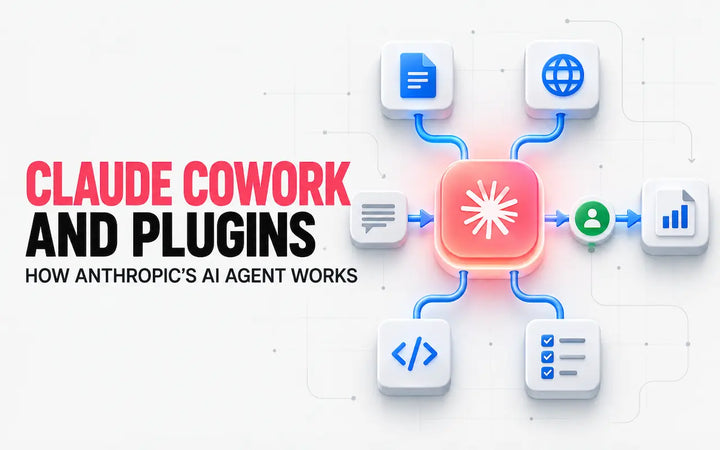
Learn how Claude Cowork, plugins and agentic workflows work for business, including practical use cases, security risks and responsible AI...

Artificial intelligence rarely belongs to one department. A business team may propose a use case, engineers may build or configure...