
 Ai Governance
AI Governance Training for Beginners: Where to Start and What to Learn
New to AI governance? Learn the skills, principles and frameworks to study first, then compare beginner training options and choose...

Artificial intelligence rarely belongs to one department. A business team may propose a use case, engineers may build or configure the system, legal and privacy teams may assess obligations, security specialists may test controls, and senior leaders may decide whether the remaining risk is acceptable.
Participation does not automatically create accountability.
AI governance roles are the organizational roles involved in directing, managing, reviewing, and overseeing how AI is selected, developed, purchased, deployed, monitored, changed, and retired.
Who is accountable for AI? At the enterprise level, accountability normally sits with the governing or executive authority designated by the organization. At the system level, a named business or system owner should answer for the AI system’s purpose and organizational use. Technical, legal, privacy, security, risk, and governance teams perform specialist work, while independent assurance reviews whether governance controls are working.
The titles will vary. What matters is whether the organization has clearly defined who performs the work, who answers for the outcome, who can make or stop a decision, and who provides oversight.
In this article, accountability primarily means internal organizational answerability and decision ownership. Legal liability and regulatory responsibility depend on applicable law, contracts, jurisdiction, and the organization’s role in a particular AI value chain.
AI governance roles define how people and organizational functions participate in controlling and overseeing artificial intelligence. They connect AI governance policies with real decisions about business purpose, data use, risk assessment, testing, deployment, monitoring, incidents, changes, and retirement.
AI governance is generally cross-functional because no single function holds all the knowledge needed to govern an AI system. Business teams understand the intended purpose and operational consequences. Technical teams understand how the system works. Legal, compliance, privacy, cybersecurity, risk, and assurance functions contribute specialist analysis and challenge.
Organizations may use titles such as AI governance lead, responsible AI lead, AI risk manager, product owner, system owner, model owner, or governance committee. These are organizational choices, not universal job titles.
|
Concept |
Question it answers |
Example |
|
Role |
Who participates? |
Business owner, engineer, privacy professional |
|
Responsibility |
Who performs the work? |
Technical team conducts performance testing |
|
Accountability |
Who ultimately answers for the outcome? |
System owner answers for operational use |
|
Decision authority |
Who can approve, reject, restrict, pause, or retire the system? |
Authorized executive accepts risk above a defined threshold |
|
Oversight |
Who reviews or challenges the process? |
Internal audit assesses governance controls independently |
These distinctions help organizations translate AI governance principles such as accountability, transparency, proportionality, privacy, security, human oversight, and continuous improvement into assigned work and decision rights.
A policy may state that AI must be used responsibly. Roles and authorities determine who assesses the system, who reviews the evidence, who approves the use, and who acts when the system no longer operates within acceptable limits.
There is no single job title that is universally accountable for all AI governance.
The appropriate accountability model depends on the organization’s size, operating structure, AI use cases, risk profile, existing governance functions, and applicable requirements. Accountability may be distributed across several levels, but each significant decision should have an identifiable owner.
A workable model usually separates three layers:
Enterprise leadership owns organizational direction, governance arrangements, resources, and significant risk decisions.
A named business or system owner answers for the purpose and organizational use of a specific AI system.
Specialist and assurance functions conduct defined assessments, implement controls, provide challenge, and review whether governance is effective.
This does not mean everyone is equally accountable. Several teams may be responsible for completing the work, while one identified role holds final accountability for a particular decision.
Enterprise-level accountability concerns the organization’s overall approach to AI. Depending on the governance structure, relevant authority may sit with a board, executive committee, chief executive, designated senior executive, or another governing body.
This level may cover:
Strategic direction for AI
Enterprise governance policies
Risk appetite or tolerance where applicable
Resource allocation
Delegation of approval authority
Significant risk acceptance
Portfolio-level reporting
Escalation beyond delegated limits
Executives do not normally conduct operational testing, maintain system documentation, or complete every risk assessment. Their role is to ensure that appropriate governance arrangements exist, have sufficient authority and resources, and produce the information needed for informed decisions.
Managers involved in AI adoption may therefore need AI governance training for managers that explains accountability, escalation, risk acceptance, and oversight rather than focusing only on technical AI capabilities.
Each in-scope AI system or use case should have an identifiable business or system owner. The intensity of governance can remain proportionate to the system’s potential impact.
The accountable owner is commonly a business owner, product owner, service owner, or system owner with sufficient authority to control how the system is used.
System-level accountability can include:
Defining the business purpose
Establishing the intended use
Identifying affected users and stakeholders
Confirming operating conditions
Ensuring required reviews occur
Approving deployment within delegated authority
Monitoring use and outcomes
Responding to incidents and control failures
Initiating reassessment after material changes
Restricting or retiring the system when necessary
Ownership must continue after deployment. System performance, operating conditions, input data, vendor features, user behaviour, integrations, threats, and legal requirements can change.
A model owner may manage a model as a technical asset, while a business or system owner remains accountable for the application in which the model is used. Where both roles exist, the distinction should be documented.
Specialist functions contribute expertise within their mandates.
Legal and compliance teams interpret relevant obligations and contracts. Privacy teams assess personal-data risks. Cybersecurity teams examine threats, vulnerabilities, and controls. Risk teams support assessment and escalation. Technical teams build, configure, test, and monitor systems. Data owners govern access, quality, permitted use, and retention.
These teams may own the quality of their advice, controls, or evidence without owning the entire AI use case.
Internal audit or another independent assurance function may assess whether governance controls are designed and operating effectively. That role should remain distinct from operating the governance program.
Clear ownership requires more than naming participants. Organizations should document the scope of each decision, the evidence required, the role’s delegated authority, and the conditions that trigger escalation.
|
AI governance decision |
Illustrative accountable role |
Evidence normally considered |
Possible escalation trigger |
|
Accept a use case into the governance process |
Business or system owner |
Purpose, users, data, expected impact |
Unclear purpose or prohibited use |
|
Authorize data use |
Designated data owner or other authorized role |
Source, purpose, access, quality, retention |
Sensitive data or uncertain authority |
|
Accept evaluation results |
Designated approval authority |
Test results, limitations, unresolved issues |
Results fall outside approved thresholds |
|
Approve deployment |
Business or system owner within delegated authority |
Completed reviews, controls, conditions |
Risk exceeds the owner’s delegated limit |
|
Pause or restrict operation |
Named operational or incident authority |
Monitoring, incident, or control evidence |
Serious harm, control failure, or uncertainty |
|
Accept residual risk |
Authorized risk acceptor |
Risk assessment and treatment record |
Exposure exceeds the role’s authority |
|
Retire the system |
Business or system owner |
Retirement, continuity, and data-disposition plan |
Records, legal, vendor, or continuity concern |
This is an illustrative decision model, not a universal legal assignment. Higher-risk decisions may require executive, committee, or other independent approval.
Organizations may use different titles or combine several responsibilities in one role. The necessary governance functions should still be clearly assigned, documented, and supported by appropriate authority.

Executive leadership sets strategic direction and sponsors the governance structure needed to support responsible AI use.
Relevant responsibilities may include approving enterprise policies, allocating resources, defining acceptable risk levels, resolving major disputes, reviewing portfolio exposure, and making decisions that exceed delegated authority.
Leadership should also determine which AI decisions may be handled by business owners and which require executive escalation.
An AI governance lead or coordinating function helps turn policy into repeatable processes.
Responsibilities may include:
Coordinating governance procedures
Maintaining the AI inventory
Managing use-case intake
Organizing reviews and approvals
Tracking decisions and conditions
Supporting governance committees
Preparing reports
Coordinating cross-functional input
Escalating unresolved issues
The governance lead coordinates governance but is not automatically accountable for the purpose, performance, or consequences of every AI system.
The business or system owner defines why an AI system is needed, what it may be used for, who may use it, and what outcomes are expected.
The owner should ensure that required reviews and tests occur before deployment. After deployment, the owner should confirm that monitoring continues and that the system remains suitable for its intended use.
When a material change, incident, or unacceptable performance issue occurs, the owner should know when to restrict use, request reassessment, escalate the issue, or retire the system.
The role requires authority. A person cannot be meaningfully accountable if they cannot obtain information, enforce operating conditions, secure resources, or stop unacceptable use.
Consider an illustrative customer-service AI system. The business owner defines the approved support use cases and remains answerable for its organizational use. The technical team configures and tests it. Privacy reviews customer-data handling. Security evaluates access and integration risks. Legal and compliance assess applicable obligations. The governance function coordinates evidence and approvals. Executive involvement may be required if the risk exceeds delegated limits.
This is an illustrative example, not a universal governance model.
An AI governance committee can bring together business, technology, legal, compliance, privacy, cybersecurity, risk, procurement, human resources, and assurance perspectives.
Its responsibilities may include cross-functional review, policy oversight, significant risk review, dispute resolution, approval of defined matters, and escalation to executive leadership.
The committee’s charter should state:
Which systems or decisions it reviews
Whether it advises or approves
How decisions are recorded
How conflicts are resolved
When matters must be escalated
Who remains accountable after the meeting
A committee does not automatically replace individual accountability. Collective participation without a named decision owner can make it harder to act when problems arise.
Legal and compliance teams interpret applicable laws, regulations, internal policies, contracts, and sector-specific obligations. They may advise on use restrictions, disclosures, documentation, regulatory exposure, vendor terms, and required controls.
For example, the EU AI Act distinguishes legally defined actors such as providers, deployers, importers, and distributors. Organizations must determine their role for each relevant AI system and value-chain relationship rather than transferring every obligation to an internal AI governance manager. The European Commission’s AI Act guidance provides official information about responsibilities affecting providers and deployers.
Legal and compliance teams should not be treated as the owners of every AI risk. They provide interpretation, review, advice, and challenge within their mandates.
Professionals performing this work may use AI governance training for compliance professionals to strengthen their understanding of AI-specific governance processes, accountability, documentation, and risk concepts.
Privacy and data protection teams assess how personal data is collected, used, shared, retained, and protected.
Their work may cover transparency, data minimization, individual rights, privacy risk, data transfers, and assessments required under applicable law. Involvement may be necessary when personal data is used for training, fine-tuning, retrieval, prompting, evaluation, monitoring, or automated decision support.
Privacy review does not replace the business owner’s accountability for the use case.
Cybersecurity teams assess threats, vulnerabilities, access controls, integrations, data leakage, system resilience, incident preparedness, and third-party dependencies.
Risk teams may provide methods for identifying, evaluating, treating, accepting, and monitoring AI risks. They can challenge risk ratings and help define escalation thresholds.
These functions may recommend that a system be restricted or paused. Final authority should be documented rather than assumed.
Technical teams develop, configure, integrate, test, document, maintain, and monitor AI systems.
Their responsibilities may include:
Data preparation
Model or service configuration
System architecture
Performance evaluation
Technical controls
Integration testing
Logging
Version management
Change implementation
Technical monitoring
Developers and data scientists remain responsible for the quality of assigned work, but they should not be treated as the sole owners of business, legal, privacy, ethical, or operational risk.
Internal audit and independent assurance functions assess whether governance, risk management, and controls are appropriately designed and operating as intended.
They may review policies, test controls, evaluate decision records, examine supporting evidence, and report findings to relevant governing bodies.
Independence matters. Internal audit should not operate the same governance processes it may later need to assess.
Additional functions may be relevant depending on the organization and use case.
A data owner or steward may authorize data use and oversee quality, access, lineage, retention, and disposition. Procurement and vendor-management teams may assess supplier terms, documentation, service changes, dependencies, and exit arrangements.
Human operators or reviewers may be responsible for checking outputs, applying judgment, overriding recommendations, correcting errors, and escalating concerns. Incident-response leads may coordinate containment, investigation, communication, and controlled resumption.
Human resources may support workforce policies, role definitions, competence, and training. Records-management teams may advise on the retention and disposal of governance evidence. These are necessary functions in some contexts, but they do not represent mandatory standalone AI job titles.
Responsibilities change as an AI system moves from an initial proposal to operational use and eventual retirement. Organizations may use different lifecycle models, but accountability should remain visible at every stage.
|
AI lifecycle activity |
Responsible lead |
Accountable decision owner |
Key contributors or oversight |
|
Use-case identification |
Business or product team |
Business or system owner |
Governance, technical specialists, affected functions |
|
Risk assessment |
Governance or designated risk coordinator |
Business/system owner or authorized risk owner |
Legal, privacy, security, data, technical specialists |
|
Data preparation |
Data or technical team |
Designated data or system owner |
Privacy, security, subject-matter experts |
|
Development or configuration |
Technical or product team |
Technical delivery owner |
Data, security, governance, business owner |
|
Testing and evaluation |
Testing or evaluation team |
Designated acceptance authority |
Business experts, risk, security, governance, independent reviewers |
|
Deployment |
Technical operations |
Business/system owner within delegated authority |
Governance, legal, privacy, security, risk |
|
Monitoring |
Operations and technical teams |
Business/system owner |
Governance, risk, affected users |
|
Incident response |
Designated incident lead |
Authority named in the incident plan |
System owner, security, legal, privacy, technical team |
|
Material change or retraining |
Technical or product team |
Business/system owner |
Governance, risk, legal, privacy, security |
|
Retirement |
Technical operations |
Business/system owner |
Data owner, legal, records management, governance |
The same person does not need to perform every activity. What matters is that responsibility, accountability, decision authority, and oversight are clearly assigned.
RACI is a method for clarifying participation in a process:
Responsible: Performs or coordinates the work.
Accountable: Ultimately answers for completion or the decision.
Consulted: Provides expertise before the action or decision.
Informed: Receives relevant information.
A RACI matrix should normally identify one clear accountable role for each activity. Multiple responsible contributors may participate, but too many accountable roles can obscure final ownership.
Illustrative example only. Organizations should adapt responsibility assignments to their own structure, risk profile, delegated authority, and applicable requirements.
|
Governance activity |
Executive leadership |
AI governance |
Business/system owner |
Legal/compliance |
Security/risk |
Technical team |
|
Enterprise AI policy |
A |
R |
C |
C |
C |
C |
|
AI use-case intake |
I |
C |
A/R |
C |
C |
C |
|
Integrated risk assessment |
I |
R |
A |
C |
C |
C |
|
Technical testing |
I |
C |
A |
I |
C |
R |
|
Deployment decision within delegated authority |
I |
C |
A/R |
C |
C |
C |
|
Ongoing monitoring |
I |
C |
A |
I |
C |
R |
|
Governance incident escalation |
I |
R |
A |
C |
C |
C |
|
System retirement |
I |
C |
A |
C |
C |
R |
Specialist security, privacy, legal, and technical assessments may need their own RACI assignments. For example, security may be Responsible for a security assessment even when the business owner remains Accountable for ensuring that the assessment is completed and its findings are addressed.
The matrix also does not replace a decision-rights policy. Organizations should separately document who can reject, restrict, pause, approve exceptions, accept residual risk, authorize resumption, and retire an AI system.

Begin by identifying internally developed systems, vendor products, embedded AI features, generative AI tools, pilots, automated decision systems, and AI used by contractors.
For each item, record its purpose, owner, users, vendor, data categories, affected stakeholders, deployment status, risk classification, integrations, and review history.
An inventory provides the foundation for assigning ownership and prioritizing oversight. Without it, an organization may have detailed governance procedures but no reliable view of where AI is being used.
Assign an identifiable person or role with enough authority to own the system’s organizational use.
Naming only a department, such as IT, marketing, or operations, may be insufficient because it does not show who must decide when a review is delayed, a control fails, or a risk threshold is exceeded.
Ownership records should also identify a backup or successor so that accountability does not disappear when someone changes roles.
Document who can:
Approve or reject a use case
Authorize data use
Accept evaluation results
Impose operating conditions
Approve deployment
Grant an exception
Accept residual risk
Restrict or pause operation
Escalate unresolved concerns
Authorize resumption
Retire the system
Each decision right should specify its scope, required evidence, delegated limit, escalation trigger, backup decision-maker, and record location.
Connect each lifecycle activity to a responsible lead, accountable decision owner, specialist contributors, oversight function, evidence requirement, and approval point.
Include post-deployment responsibilities such as monitoring, incident response, vendor changes, reassessment, retraining, and retirement.
Define when and how an issue moves beyond the system owner’s authority.
Escalation triggers may include:
Risk exceeding an approved threshold
Serious or repeated incidents
Unexpected effects on people
Security or privacy control failures
Material changes to the system
New data or integrations
Significant vendor changes
Use outside the approved purpose
Changes in applicable requirements
The escalation process should identify the recipient, required evidence, response expectations, temporary restrictions, and available decisions.
Record roles and authorities in policies, committee charters, procedures, system records, approval documents, job descriptions, and RACI or decision-rights matrices.
Review assignments periodically and when a system, vendor, organizational structure, operating context, or relevant requirement changes.
Governance documentation should show not only who attended a review, but also who made the decision, what evidence was considered, what conditions were imposed, and when the decision must be reconsidered.
IT may control infrastructure, access, and technical support, but the business function using AI should remain answerable for its intended purpose and operational consequences.
A committee can coordinate expertise and approve defined matters. It should not become a substitute for identifying who owns a system or decision after the meeting ends.
A system owner who cannot obtain information, enforce conditions, restrict use, or escalate concerns cannot effectively own the outcome.
Labels such as “Legal,” “IT,” or “Risk” do not identify the individual or role expected to decide and act. Department-level ownership should be translated into defined role-level authority.
Technical teams cannot independently determine business suitability, interpret every legal obligation, accept organizational risk, or resolve all potential effects on people.
Governance continues through monitoring, incidents, changes, reassessment, and retirement. Project ownership that ends at launch creates a significant control gap.
Purchasing or licensing a system does not remove the need for internal ownership. The organization must still govern selection, configuration, integration, access, use, monitoring, vendor changes, and exit arrangements.
Employees may recognize a problem but not know who can pause the system, accept the risk, or authorize resumption. Escalation authority should be established before an incident.
Compliance may interpret requirements and challenge decisions, but the business or system owner remains responsible for operating the system within approved conditions.
A governance lead who can document concerns but cannot obtain evidence or escalate unresolved decisions may become an administrative coordinator rather than an effective governance function.
|
Organization size |
Typical governance approach |
|
Small |
Several responsibilities may be combined across a limited number of people |
|
Medium |
More formal coordination, documented approvals, and specialist involvement may develop |
|
Large |
Governance, risk, compliance, technical, business, and assurance functions may become more specialized |
Organizational size affects how many people perform governance activities, but it should not eliminate clarity about accountability.
A small organization may combine executive sponsorship, governance coordination, and system ownership across fewer people. It should still identify who can approve, reject, restrict, escalate, and retire each in-scope AI system.
Effective AI governance skills combine sufficient technical understanding with governance judgment and organizational communication.
Relevant capabilities include AI literacy, risk management, policy development, regulatory awareness, data and privacy fundamentals, cybersecurity awareness, documentation, stakeholder management, decision-making, and cross-functional collaboration.
Governance professionals do not always need to build models. They do need to understand an AI system well enough to ask informed questions about its purpose, data, limitations, evaluation, users, controls, monitoring, and potential effects.
Communication is equally important. Governance roles must translate between business, technical, legal, risk, and executive perspectives while clearly explaining evidence, uncertainty, options, and escalation needs.
These capabilities can support an AI governance career path, but there is no single standardized entry route. Professionals may enter the field from compliance, risk, privacy, cybersecurity, law, audit, data governance, product management, engineering, public policy, or business leadership.
Build foundational knowledge of governance concepts, organizational responsibilities, risk, and oversight with the AI Governance Fundamentals course. The course supports structured learning about AI governance without replacing legal advice, technical validation, or role-specific professional judgment.
The NIST AI Risk Management Framework is intended for voluntary use and organizes AI risk management around Govern, Map, Measure, and Manage.
NIST describes Govern as a cross-cutting function that informs the other functions. AI RMF 1.0 addresses accountability structures, documented roles, lines of communication, training, inventory processes, senior-level commitment, monitoring, and lifecycle risk management.
The framework recognizes that managing AI risks requires different actors and perspectives across the lifecycle. It does not state that every organization must appoint an AI governance manager.
At the time of this article’s latest review, NIST continued to publish AI RMF 1.0 while working on a revision. Organizations should consult the official NIST page for current updates.
ISO/IEC 42001 specifies requirements for establishing, implementing, maintaining, and continually improving an artificial intelligence management system.
ISO describes an AI management system as interrelated organizational elements used to establish AI-related policies and objectives, together with the processes needed to achieve them. Its management-system approach connects leadership, organizational responsibilities, governance processes, evaluation, and continual improvement.
ISO/IEC 42001 does not prescribe a single organizational chart for every organization.
Neither framework automatically requires a Chief AI Officer, a dedicated AI governance department, or a particular committee structure.
Organizations must determine which roles, authorities, competencies, reporting relationships, and assurance arrangements are suitable for their own context. A framework can describe governance outcomes, but the organization must decide who will perform the work and who has authority to make consequential decisions.
AI governance is cross-functional, but accountability should not remain a vague shared expectation.
Executive leadership plays an important role in organizational direction, resources, delegated authority, and significant risk decisions. Each in-scope AI system should have an identifiable owner who remains answerable for its purpose and organizational use throughout the lifecycle.
Legal, compliance, privacy, cybersecurity, risk, data, engineering, product, procurement, and operational teams contribute distinct responsibilities. Governance committees can coordinate review and exercise defined authority, but they do not automatically replace individual accountability. Independent assurance should review governance without becoming its operational owner.
A clear governance structure answers five questions at every significant lifecycle stage: who participates, who performs the work, who is accountable, who has decision authority, and who provides oversight.
RACI matrices, decision-rights mapping, AI inventories, delegated limits, evidence requirements, and documented escalation paths help turn those answers into an operating governance system.
Ai Governance
New to AI governance? Learn the skills, principles and frameworks to study first, then compare beginner training options and choose...
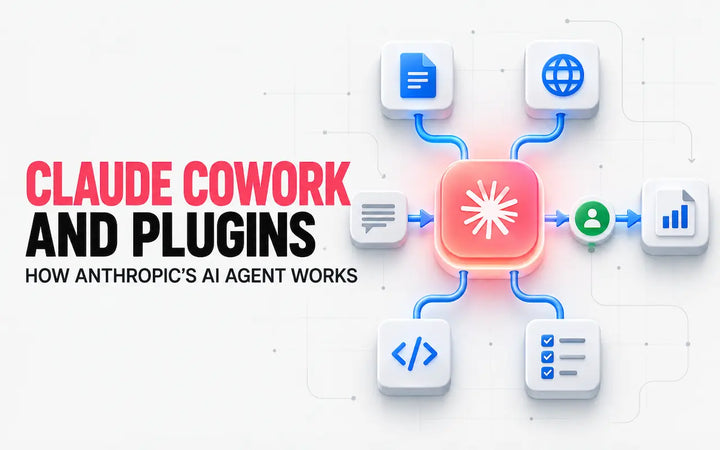
Learn how Claude Cowork, plugins and agentic workflows work for business, including practical use cases, security risks and responsible AI...