
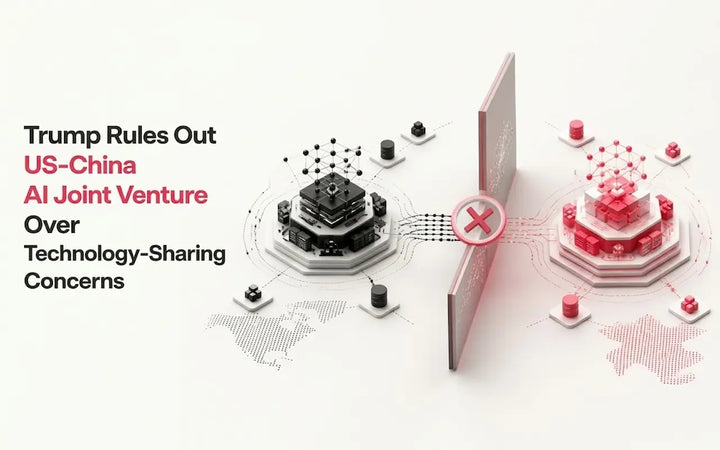
Trump Rules Out US-China AI Joint Venture Over Technology-Sharing Concerns
Trump rejects a U.S.-China AI joint venture over technology-sharing concerns while bilateral AI risk dialogue continues. Here is what it...

AI regulation is expanding globally, but there is no single global model of AI regulation. Some jurisdictions have enacted comprehensive or cross-sector AI legislation. Others regulate AI through privacy, consumer protection, employment, discrimination, cybersecurity, product safety and sector-specific laws. Some rely substantially on regulatory guidance, governance frameworks and government policy while considering further legislation.
For international businesses, these differences matter. The same AI system can face different requirements depending on where it is developed, supplied or deployed, who uses it, whether personal data is involved, what decisions it supports and whether the system falls into a regulated or higher-risk category.
This guide compares major AI laws around the world as of September 2026. It distinguishes binding legislation from regulatory guidance, voluntary frameworks, government policy and proposed measures so that businesses can understand what applies now, what is changing and what still remains a proposal.
|
Jurisdiction |
Main approach |
AI-specific law or binding AI rules? |
Position in September 2026 |
|
European Union |
Horizontal risk-based regulation |
Yes |
EU AI Act applies in phases, with important dates amended in 2026 |
|
United States |
Federal, state and sector-based |
Yes at state level; existing federal laws also apply |
No single comprehensive federal AI Act |
|
China |
Layered AI, algorithm, content and data regulation |
Yes |
Multiple binding AI-related measures apply |
|
United Kingdom |
Existing-law and regulator-led |
No horizontal AI Act |
AI is mainly regulated through existing legal regimes |
|
Canada |
Privacy-led with developing legislation |
No comprehensive AI Act |
Former AIDA proposal did not become law |
|
Japan |
AI-specific promotion and governance legislation |
Yes |
AI-specific legislation is in effect |
|
South Korea |
Cross-sector AI framework legislation |
Yes |
AI Basic Act is in force |
|
Singapore |
Governance and assurance-led |
Mainly frameworks plus existing laws |
Model frameworks are guidance, not a general AI Act |
|
India |
Data, digital and sector-based |
No comprehensive AI Act |
DPDP implementation and synthetic-content rules are important |
|
Vietnam |
Risk-based AI legislation |
Yes |
National AI Law has been in force since March 2026 |
|
Brazil |
Privacy law plus developing AI legislation |
Comprehensive AI legislation remains proposed |
Bill remains in the legislative process |
|
Australia |
Existing-law model plus guidance |
No comprehensive AI Act |
Earlier mandatory high-risk guardrail proposal is not proceeding at this time |
The absence of a comprehensive AI Act does not mean that a jurisdiction has no legally binding AI-related obligations.
Countries regulate artificial intelligence through very different legal architectures.
The EU uses horizontal legislation that classifies AI according to risk and assigns responsibilities to actors including providers and deployers. Vietnam has also adopted a statutory risk-classification approach. China regulates important AI activities through several binding measures covering algorithms, generative AI, synthetic content and digital services. South Korea uses a framework statute that combines AI development policy with transparency, trust and safety requirements.
Other countries distribute AI regulation across existing laws. The United States combines federal statutes and agency authority with state legislation. The UK relies substantially on established regulators and existing legal regimes. Australia currently combines existing legislation with responsible-AI guidance, while Singapore has developed governance and assurance frameworks without making its Model AI Governance Framework a general AI statute.
AI-related legal obligations can exist even when a country has no comprehensive AI-specific law.
For example, an AI recruitment tool may fall under employment and discrimination laws. A generative AI service that processes personal information may trigger privacy requirements. AI-generated advertising can be subject to consumer-protection rules. AI deployed in healthcare, financial services, transport or other regulated industries may face additional sector-specific requirements.
Businesses therefore need to ask two separate questions:
Does the jurisdiction have an AI-specific law?
Which existing laws apply to this particular AI use?
The answers are often different.
Regulatory exposure can depend on the provider's location, where the system is supplied, where users or affected individuals are located, its intended purpose, sector, risk classification and use of personal data.
Organisations should therefore avoid treating global AI compliance as a single classification exercise. The same system may be classified as high risk in one jurisdiction, regulated principally through privacy law in another, and subject to content or platform requirements elsewhere.
Several developments materially changed the regulatory landscape in 2026.
The EU amended important parts of the AI Act implementation timetable through its 2026 AI Omnibus. South Korea's AI Basic Act moved into force. Vietnam's first dedicated national AI Law became effective. Colorado enacted revised rules governing automated decision-making. India continued implementing its data-protection framework and strengthened requirements concerning synthetically generated information. Australia confirmed that its previous proposal for mandatory high-risk AI guardrails would not proceed at this time.
These developments demonstrate why legal status matters. An article written only one year earlier could now contain incorrect implementation dates or describe measures as proposals that have since become law.
The European Union's principal AI-specific legislation is Regulation (EU) 2024/1689, commonly known as the EU AI Act.
The Act establishes a horizontal risk-based framework covering prohibited AI practices, high-risk systems, transparency requirements, general-purpose AI models and institutional governance. The European Commission's official AI Act regulatory framework guidance explains the structure and phased implementation of the regime.
The AI Act entered into force on 1 August 2024. Prohibited practices and initial AI-literacy provisions began applying on 2 February 2025, while governance rules and obligations concerning general-purpose AI began applying from 2 August 2025.
High-risk systems can be subject to requirements involving risk management, data governance, technical documentation, logging, information for deployers, human oversight, accuracy, robustness, cybersecurity and post-market monitoring.
Organisations first need to determine their role. The AI Act distinguishes between providers, deployers, importers, distributors and other participants in the AI value chain.
Classification also matters. A system classified as high risk can trigger significantly more extensive governance and documentation requirements than an AI system outside that category.
Transparency duties apply separately to certain AI systems and AI-generated or manipulated content. General-purpose AI providers also have a distinct regulatory framework, with additional obligations for models presenting systemic risk.
AI literacy remains relevant after the 2026 amendments. Providers and deployers must take measures supporting the development of appropriate AI literacy among people dealing with AI systems on their behalf.
Businesses should be particularly careful with older AI Act implementation calendars.
The 2026 amendments changed important application dates. Under the amended legal framework, requirements for relevant Annex III high-risk AI systems apply from 2 December 2027, while requirements for high-risk AI systems connected with regulated products under Annex I apply from 2 August 2028.
The authoritative amended legislation is available through EUR-Lex Regulation (EU) 2026/1744.
The European Commission also provides a current explanation of the changes through its AI Omnibus update.
The Omnibus also introduced additional prohibited practices concerning specified non-consensual intimate material and child sexual abuse material, which begin applying on 2 December 2026.
The EU AI Act does not eliminate every possibility for national AI-related legislation.
Italy, for example, enacted Law No. 132 of 23 September 2025 concerning artificial intelligence. The law entered into force in October 2025 and operates alongside the EU regulatory framework. The official legislation can be accessed through the Italian Official Gazette.
International businesses may therefore need to assess both EU-wide requirements and relevant national provisions.
The United States does not currently have one comprehensive horizontal federal AI statute equivalent to the EU AI Act.
Instead, AI regulation involves existing federal laws, federal regulatory agencies, executive policy and an expanding body of state legislation.
Consumer protection, discrimination, employment, privacy, financial-services, healthcare and other federal rules can apply when AI is used within activities those laws already regulate.
The country's federal-state structure is fundamental.
Federal authorities can regulate activities within their existing statutory powers, while individual states can create separate privacy, employment, consumer and automated-decision rules unless those requirements are legally pre-empted.
A company operating nationally therefore cannot assume that monitoring Washington alone provides a complete picture of U.S. AI regulation.
Texas's Responsible Artificial Intelligence Governance Act provides one example of state-level AI legislation. The official Texas Legislature text for House Bill 149 establishes rules governing specified AI uses and related enforcement.
Colorado also materially revised its AI framework in 2026.
Colorado Senate Bill 26-189 became law in May 2026 and regulates automated decision-making technology used in consequential decisions. Important provisions begin applying from 1 January 2027.
Businesses should monitor federal regulatory activity, state AI statutes, privacy legislation, employment and discrimination rules, automated-decision requirements and sector regulators.
The relevant compliance question is not simply whether the U.S. has "an AI Act." It is which combination of federal, state and sector-specific rules applies to a particular system and use.
China regulates AI through several binding measures rather than through one comprehensive horizontal AI Act.
The Interim Measures for the Management of Generative Artificial Intelligence Services have applied since August 2023 and cover generative AI services offered to the public in mainland China. The official rules published by the Cyberspace Administration of China address areas including training data, personal information, content governance and provider responsibilities. See the official CAC Generative AI Measures.
China separately regulates algorithmic recommendation services and deep-synthesis technologies.
A further development is the Measures for the Identification of Artificial Intelligence Generated and Synthetic Content, which took effect on 1 September 2025. The official CAC announcement on AI-generated content identification explains the identification and labelling regime.
For businesses, China's model can require simultaneous consideration of AI-specific rules, content regulation, cybersecurity, personal-information protection, platform duties and algorithm-related requirements.
As of September 2026, the UK has not enacted a horizontal AI Act equivalent to the EU AI Act.
The government continues to rely mainly on existing regulators and legal regimes covering data protection, competition, equality, consumer protection, product safety and regulated sectors.
A July 2026 UK parliamentary answer on AI regulation confirmed that existing expert regulators remain central to the government's approach while additional legislation may be considered where existing rules are insufficient.
A subsequent September 2026 parliamentary response showed that further AI legislation remained under consideration rather than already forming a comprehensive UK AI statute.
The EU has enacted a horizontal law containing specific AI classifications, regulated roles and phased obligations.
The UK currently relies more heavily on laws and regulators that already govern the context in which AI is used.
A business operating in both markets therefore requires separate legal mapping. An AI application might require classification under the EU AI Act while its UK deployment is assessed mainly through data protection, equality, consumer, competition or sector-specific law.
Canada currently has no enacted comprehensive federal AI Act.
The proposed Artificial Intelligence and Data Act, or AIDA, appeared within Bill C-27 during Canada's previous Parliament, but it did not become law. The legislative history remains available through the Parliament of Canada Bill C-27 record.
Existing privacy laws nevertheless apply to AI-related processing.
In May 2026, Canada's federal and provincial privacy regulators published findings from a joint investigation of OpenAI. The Office of the Privacy Commissioner investigation report examined consent, transparency, accuracy, collection and accountability issues under existing privacy laws.
The investigation demonstrates an important global principle: the absence of a comprehensive AI Act does not prevent regulators from applying existing legislation to AI systems.
Canada also introduced further privacy and consumer-data legislation in 2026. Businesses should distinguish these developing proposals from legislation already in force.
Japan now has AI-specific legislation.
The Act on Promotion of Research and Development and Utilization of Artificial Intelligence Related Technology, Act No. 53 of 2025, established a national legal framework focusing on AI development, utilisation, responsibilities and government strategy.
Official information about the legislation is available through the Cabinet Office AI Act resource.
Japan's framework is not structured like the EU's detailed high-risk conformity regime. It places substantial emphasis on national strategy, responsible adoption, innovation and governance while existing privacy, consumer, intellectual-property, competition and sector laws continue to apply.
Japan also adopted an updated Artificial Intelligence Basic Plan in July 2026. The plan is government policy rather than a separate statutory compliance regime. The Cabinet Office AI Basic Plan page records its adoption on 14 July 2026.
South Korea has enacted comprehensive AI framework legislation.
The Framework Act on the Development of Artificial Intelligence and the Creation of a Foundation for Trust, commonly called the AI Basic Act, entered into force in 2026 and was subsequently amended.
The current legislative text is available through South Korea's official national legislation database.
The law addresses AI development, transparency, generative AI, safety and high-impact AI systems. It also includes extra-territorial provisions where conduct outside South Korea affects the domestic market or users.
For example, the legislation requires businesses to assess whether systems fall within the high-impact AI category, while separate provisions impose transparency duties concerning high-impact and generative AI products and services.
South Korea's government has also announced a grace period relating to aspects of enforcement. That policy should not be confused with the legal effective date of the Act itself.
Singapore's approach relies heavily on AI governance, testing and assurance frameworks rather than one comprehensive AI statute.
The country's Model AI Governance Framework and AI Verify provide organisations with tools for responsible AI governance, but these instruments should not be described as general binding legislation.
Singapore expanded this approach in 2026 through its Model AI Governance Framework for Agentic AI.
According to the Infocomm Media Development Authority's 2026 framework update, the framework focuses on issues including risk boundaries, meaningful human accountability, technical controls, transparency and responsible deployment of AI agents.
Binding obligations can still arise from Singapore's Personal Data Protection Act and sector-specific laws.
Businesses should therefore distinguish voluntary AI-governance tools from binding legislation that applies to the underlying activity.
India does not currently have a comprehensive horizontal AI Act.
However, AI systems can fall within data-protection, information-technology, consumer and sector-specific regulation.
The Digital Personal Data Protection Act 2023 and the Digital Personal Data Protection Rules 2025 are particularly important where AI systems process digital personal data.
India's Ministry of Electronics and Information Technology provides the final rules and an official implementation timetable through its Digital Personal Data Protection Rules 2025 resource.
Implementation is phased, so organisations should confirm whether a particular requirement is currently operative rather than treating every provision as having the same commencement date.
India also continued work on rules concerning synthetically generated information and deepfake content. These developments demonstrate that AI regulation can evolve through amendments to broader digital regulation even without a standalone AI Act.
Vietnam has become one of the most significant new AI-law jurisdictions in Asia.
Law No. 134/2025/QH15 on Artificial Intelligence was enacted on 10 December 2025 and became effective on 1 March 2026. The official status, enactment date and effective date can be verified through the Vietnamese Government legislation database.
The legislation establishes a risk-based framework governing the development, provision, deployment and use of AI.
AI systems are divided into risk categories, with additional requirements applying to higher-risk systems. These can include risk management, documentation, transparency, human oversight, conformity assessment and incident management.
For companies operating across Asia, Vietnam should therefore no longer be treated simply as a jurisdiction with an emerging AI policy. It now has enacted AI-specific legislation in force.
Brazil already regulates personal-data processing through the Lei Geral de Proteção de Dados Pessoais, or LGPD, which can apply when AI systems collect, use, infer or otherwise process personal information.
Brazil has also been developing comprehensive AI legislation.
PL 2338/2023 remains within the legislative process rather than constituting enacted comprehensive AI law. Organisations can track its current progress through the Brazilian Chamber of Deputies legislative record.
This distinction is important. Businesses already have obligations under existing Brazilian legislation, while potential additional AI-specific obligations remain dependent on the legislative process.
Australia currently regulates AI mainly through existing legislation, regulatory oversight, national policy and responsible-AI guidance rather than a comprehensive AI Act.
The Australian Government launched its National AI Plan in December 2025. The official National AI Plan sets out the government's approach to AI opportunity, adoption and safety.
An important change concerns the previous proposal for mandatory guardrails for AI used in high-risk settings.
The Australian Government now explicitly states that it will not proceed at this time with the earlier mandatory-guardrail proposal. That current position is recorded on the Department of Industry's mandatory AI guardrails consultation page.
Australia instead provides responsible-AI guidance, including practical governance measures concerning accountability, risk management, data, testing and human oversight.
These frameworks are useful, but they should not be confused with a comprehensive statutory AI Act.
Existing privacy, consumer, discrimination, safety and other laws can still regulate particular AI uses.
The Council of Europe's Framework Convention on Artificial Intelligence and Human Rights, Democracy and the Rule of Law is an important international development.
The treaty opened for signature in September 2024. As of September 2026, the conditions required for entry into force had not yet been met.
The Council of Europe's official treaty-status page for Convention No. 225 provides the authoritative record of signatures, ratifications and entry-into-force requirements.
The Convention is therefore significant, but it should not yet be described as a treaty generally in force.
Beyond Brazil, several Latin American jurisdictions continue developing AI legislation, strategies and governance frameworks.
Businesses should assess each country separately. A national AI strategy, consultation or parliamentary bill is not equivalent to binding legislation.
At continental level, the African Union has developed a Continental Artificial Intelligence Strategy intended to support responsible AI development and more coordinated national approaches.
It is a policy framework rather than continent-wide binding legislation.
Individual African countries can nevertheless regulate AI-related activities through privacy, employment, consumer, cybersecurity and sector-specific laws.
Saudi Arabia provides another example of a mixed regulatory model.
Binding personal-data requirements operate alongside AI governance and responsible-use frameworks developed by the Saudi Data and AI Authority.
SDAIA's AI Adoption Framework incorporates responsible-AI principles including fairness, privacy, security, reliability, transparency and accountability.
These governance measures should be distinguished from binding statutory obligations under Saudi data-protection and other applicable laws.
|
Jurisdiction |
Regulatory model |
Main instrument |
Legal status |
Key business focus |
|
EU |
Horizontal risk-based |
EU AI Act |
In force with phased application |
Classification, high-risk AI, GPAI, transparency |
|
U.S. |
Federal, state and sectoral |
Existing federal laws and state AI statutes |
Mixed |
Consumer, privacy, employment, automated decisions |
|
China |
Layered binding regulation |
Generative AI, algorithm and synthetic-content rules |
In force |
Content, algorithms, data, labelling |
|
UK |
Existing-law and regulator-led |
Privacy, competition, equality, safety and sector laws |
Binding existing laws |
Context-specific AI use |
|
Canada |
Privacy-led |
Existing privacy law; developing legislation |
Existing privacy laws binding |
Personal information, transparency, accountability |
|
Japan |
AI-specific promotion/governance |
Act No. 53 of 2025 |
In force |
Responsible development and national AI strategy |
|
South Korea |
Cross-sector framework |
AI Basic Act |
In force |
High-impact AI, generative AI, transparency |
|
Singapore |
Governance and assurance |
Model AI Governance Frameworks |
Mainly guidance |
Accountability, testing, agentic AI |
|
India |
Data and digital regulation |
DPDP framework, IT rules |
Phased/binding according to provision |
Data protection, platforms, synthetic content |
|
Vietnam |
Risk-based statutory model |
Law No. 134/2025/QH15 |
In force |
Classification, conformity, transparency |
|
Brazil |
Privacy plus proposed AI law |
LGPD and PL 2338/2023 |
LGPD binding; AI bill proposed |
Privacy, proposed AI risk governance |
|
Australia |
Existing-law plus guidance |
Existing law, National AI Plan and AI guidance |
Mixed |
Privacy, consumer protection, responsible adoption |
International organisations should assume that several regulatory regimes may apply to one AI system.
Market access can create regulatory exposure even where the provider is established elsewhere. Privacy laws can apply separately from AI-specific legislation. Employment use can introduce equality and labour-law considerations, while healthcare, finance, transport and other regulated sectors can add additional obligations.
Provider, deployer, distributor, controller, processor, employer and vendor status can also change legal responsibilities.
Third-party AI deserves particular attention. Purchasing a model from an external supplier does not automatically transfer all regulatory responsibility to that supplier. Organisations still need to know what data enters the system, what decisions rely on it, whether outputs are reviewed and what contractual protections exist.
Professionals who want a structured introduction to these issues can explore the AI Law & Regulation Essentials Training.
The course supports foundational understanding of AI law, regulatory approaches and the changing international governance landscape.

Identify where AI is developed, purchased, embedded and used.
Include internal models, generative AI tools, automated-decision technologies, AI features inside larger software products and systems supplied to customers.
Record each system's purpose, owner, vendor, users, affected individuals, data categories, deployment locations and role in decision-making.
Determine where each system is developed, offered, deployed and accessed and where affected people are located.
Do not assume that corporate headquarters determine every legal obligation. Some regulations apply to foreign organisations when systems affect local users or markets.
Separate requirements into categories such as:
AI-specific legislation
privacy and data protection
consumer protection
employment and equality
cybersecurity
intellectual property
product safety
sector-specific regulation
regulatory guidance
voluntary standards
Then record whether each requirement is binding now, enacted for future application, proposed, under consultation or voluntary.
Assess what the system does, who could be affected and how serious the consequences of failure may be.
Relevant considerations can include safety, fundamental rights, discrimination, financial impact, privacy, cybersecurity, misinformation and human oversight.
One internal corporate risk score should not be assumed to match the legal classification used by every jurisdiction.
Assign responsibility for AI approval, procurement, testing, monitoring, vendor management, documentation, incident management and regulatory change.
Organisations developing a more mature governance system can connect these activities with building an AI compliance program, while recognising that no generic framework replaces jurisdiction-specific legal analysis.
AI law and privacy law frequently overlap, but they are not the same regulatory field.
Model training, retrieval, profiling, inference, personalisation and automated decisions can involve personal information. Where they do, organisations may need to address lawful processing, transparency, data minimisation, purpose limitation, security, individual rights, retention and international transfers.
Canada provides a clear recent example. In 2026, privacy regulators investigated AI-model development and deployment under existing privacy laws rather than waiting for a comprehensive AI statute. The Canadian regulators' OpenAI investigation findings addressed issues including consent, transparency, data collection and accountability.
AI regulatory monitoring should cover more than newly passed legislation.
Organisations should monitor:
legislation and amendments
implementing regulations
regulator guidance
application and commencement dates
enforcement decisions
technical standards
sector-specific rules
AI safety requirements
privacy developments
international regulatory developments
The key question is often not simply, "Has a law been passed?" but, "What is its legal status today?"
The EU amended important implementation dates in 2026. South Korea's AI framework is already in force even though enforcement policy includes transition arrangements. Australia's mandatory high-risk guardrail proposal is not proceeding at this time. Brazil's broader AI legislation remains proposed. Vietnam has moved from policy development to an enacted AI law already in force.
A useful sequence is:
Proposed → Passed → Enacted → In force → Applicable → Enforced
These stages are not identical in every legal system.
A proposed law may still change. Legislative approval can precede formal enactment. A law may enter into force while particular obligations have later application dates. Regulators may then apply transition arrangements or enforcement policies.
Keeping those distinctions visible is essential for accurate global AI compliance monitoring.
Global AI regulation is becoming more developed, but it remains fragmented.
The EU, China, South Korea, Japan and Vietnam illustrate different approaches to AI-specific legislation and binding regulation. The United States, UK, Canada, Singapore, India, Brazil and Australia demonstrate alternative combinations of existing laws, state or sector regulation, governance frameworks and developing legislation.
For international organisations, the practical challenge is not simply identifying which countries have an AI Act. It is determining what type of regulatory instrument exists, whether it is legally binding, who it affects and when its requirements apply.
A structured approach to regulatory monitoring, supported by an accurate AI inventory and jurisdiction mapping, provides a stronger foundation for navigating that changing landscape.
The information in this article provides general educational information about AI regulation and should not be treated as legal advice. Organisations should assess their specific obligations with appropriate legal or compliance professionals.
Professionals seeking a structured foundation in this field can explore AI Law & Regulation Essentials Training to build their understanding of AI law, regulatory models and evolving governance requirements.
Trump rejects a U.S.-China AI joint venture over technology-sharing concerns while bilateral AI risk dialogue continues. Here is what it...

OpenAI shelved GPT-6.1 Astra after safety tests flagged scope, authorization and action-reporting issues. See what is confirmed and what remains...